
Decades of research into the impact of social isolation on seniors show that a lack of meaningful connection and engagement can have detrimental consequences. Loneliness can cause mood swings and impacts physical health, cognitive function, care utilization, and even mortality.
In skilled nursing facilities, where many older adults already contend with declining mobility or health challenges, addressing social isolation through structured, purposeful group events and life enrichment activities is increasingly recognized as a core component of quality care.
In older adults, social isolation can arise from retirement, mobility limitations, bereavement, loss of family members, or geographic separation from social networks.
Indicator | Figure |
Estimated percentage of global elderly population experiencing social isolation | |
Percentage of U.S. adults 65+ experiencing social isolation | |
Percentage of reported lifetime loneliness or isolation among older Americans |
Roughly one in three older Americans experiences loneliness or social isolation, representing approximately 18 million individuals nationwide. For those individuals, a lack of social contact carries measurable health risks.
Social isolation carries measurable health risks that extend far beyond loneliness. Research consistently demonstrates associations between social disconnection and serious physical and mental health outcomes:
Health Outcome | Increased Risk |
Depressive Symptoms | |
Heart Disease and Stroke | |
Type 2 Diabetes | |
All-Cause Mortality | |
Cognitive Decline | |
Dementia Incidence |
Based on these figures, the mortality risk associated with social isolation exceeds that of obesity, physical inactivity, and air pollution, making it one of the most significant modifiable risk factors for premature death.
Mental health outcomes show the strongest associations, with socially isolated older adults experiencing a 60% elevated risk of depression even after adjusting for baseline health status, income, and living arrangements.
Unfortunately, for adults already dealing with chronic conditions like Alzheimer’s Disease and Type 2 Diabetes, these syndromes often make it harder to socialize. That creates a concerning cascading effect, where increased isolation consequently increases disease risk, which then accelerates further decline.
Skilled nursing facilities, however, are in a unique position to break that cycle by creating structured, inclusive environments where social connection is built into daily life. This helps slow the downward spiral that chronic illness and social disconnection so often reinforce.
One of the most proactive interventions in a skilled nursing facility is the social fabric woven through daily life enrichment programming.
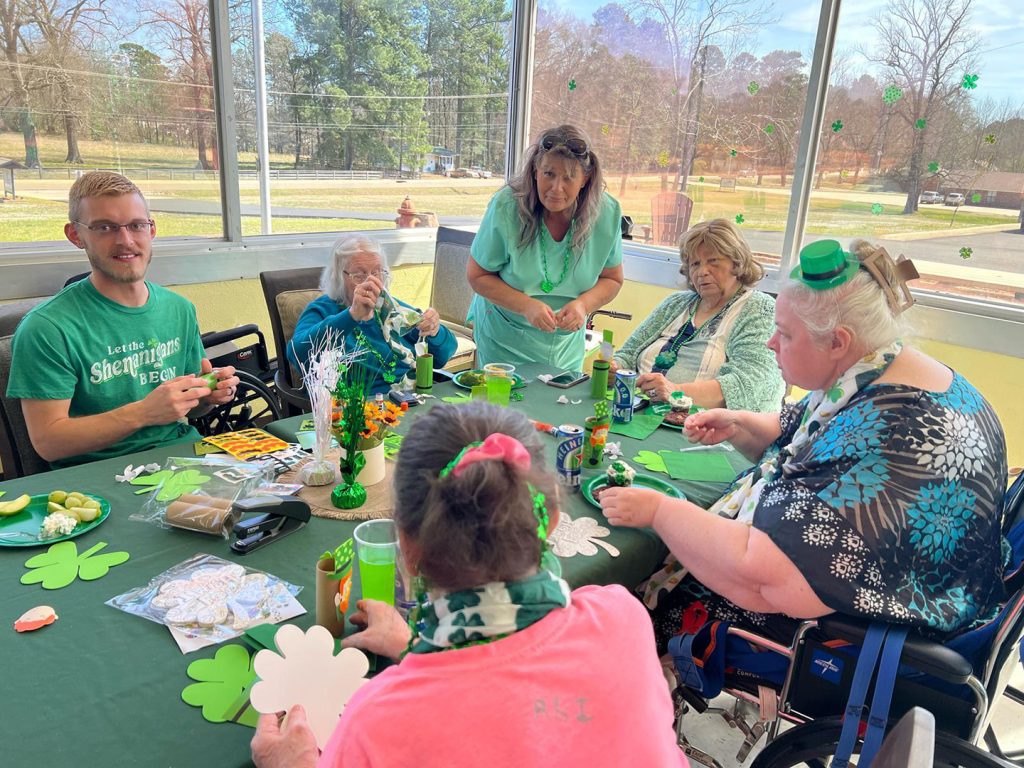
Life enrichment activities span a wide array of offerings, including social events, physical activities, arts and creative expression, cognitive games, community projects, and more. When thoughtfully designed and implemented, they target the very behaviors that counteract social isolation.
While individual programs vary by facility, common categories include:
These activities don’t just help to pass the time; they’re intentionally curated to promote social contact, build relationships, and encourage residents to remain active.
When it comes to life enrichment activities, variety is essential. Facilities offering comprehensive calendars addressing physical, social, cognitive, and emotional dimensions see significantly better outcomes than those focused on a single activity type. Consistency is also important, as daily access to structured activities, rather than sporadic programming, creates the routine social contact necessary to combat loneliness.
Activity | Outcome |
Happy hours and holiday celebrations | Improves social connections, fosters friendships and community belonging, reduces feelings of detachment |
Card games and tabletop games | Increases socialization and reduces loneliness, enhances cognitive and fine-motor skills |
Game nights and team trivia | Enhances cognitive performance, improves socialization, and slows dementia progression |
Chair yoga and group exercise | Improves everyday function, reduces fall risk, increases mobility, improves cardiac health |
Art therapy and therapy animal visits | Lowers depression scores, increases life satisfaction |
All life enrichment activities | Increases engagement, leads to better quality of life, improves resident satisfaction with daily life |
Source 1 | Source 2 | Source 3 | Source 4
Not only are life enrichment activities crucial for patient well-being, but they’re often the primary source of stimulation for patients (particularly those with cognitive decline) in skilled nursing or aged care facilities. Studies indicate that a majority of patients do not engage in self-directed activities such as walking, attending church services, or visiting other residents and family members, and rely on the facility to fill these gaps.
Social isolation carries substantial economic costs. A study by the AARP Public Policy Institute, Harvard, and Stanford universities found that lack of social contacts among older adults is associated with an estimated $6.7 billion in additional Medicare spending annually.
The cost-benefit analysis of life enrichment activities becomes clear when considering:
As the WHO Commission on Social Connection concluded in its 2025 report: “The costs of social isolation and loneliness are high, but the benefits of social connection are far-reaching”. Facilities that embrace this evidence and invest in robust life enrichment activities improve quality of life and save lives.
At The Woods, a Nightingale Community in Monticello, AR, we’re committed to ensuring our residents have a rich social life, with rotating events and activities on offer each day. We’ve seen firsthand the difference these programs can make in relation to health outcomes, resident morale, and community connection.
To learn more about the impact of social isolation on seniors, or our approach to life enrichment and holistic patient care at Nightingale, contact our team or schedule a tour to view our amenities.